
The dust detector is the instrument used to detect dust concentrations, consisting mainly of an online dust detector and a portable dust detector, which can be described as a heavy dust detector, laser dust detector, electrostatic dust detector, etc., according to the principle of measurement. The scope of application of dust detectors varies according to type, for example, pipe dust detectors are used mainly in steel, metallurgical and power generation industries, and space dust detectors are used mainly in production workshops, tunnels, etc. Let's find out what it is. Dust Monitors How does the dust detector work?
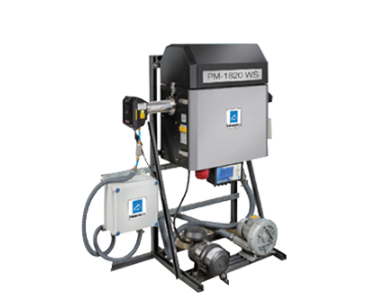
I. What's a dust detector?
Dust detectors, also known as dust meters or dust testers, are used primarily to detect dust concentrations in ambient air. The principles of operation are, inter alia, light-scattered, beta-ray and communication static sensing; It applies to various research institutions, such as meteorology, public health, labour hygiene, atmospheric pollution studies, etc. There are five main methods of rapid detection: photodispersion, beta-ray and microweight scales, electrostatic induction, and voltage scales.
II. What are the types of dust detectors?
Dust detectors can be divided into: online dust detectors and portable dust detectors; online dust detectors can be divided into pipe dust detectors, space dust detectors, portable dust detectors, etc., depending on the location of the site.
The measurement principles can be classified as heavy dust detectors, laser dust detectors, electrostatic dust detectors, etc. There are, of course, explosive dust detectors used in special cases, which are both online and portable.
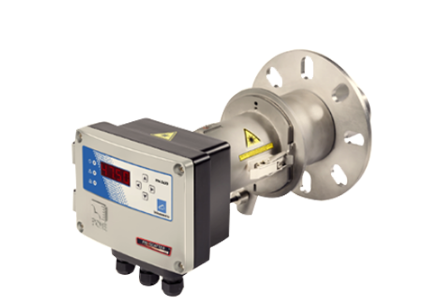
III. How the dust detector works
The use of dust detection instruments is done mainly through the various keys in the interface:
1 Test key: Press this key to enter the test program, microcomputers complete sampling according to preset, computing and data.
2 Set key: This key is fixed with the set-up amendment and can be consulted for current dust and particle data.
3. The key: The device is corrected. This key is operated by a detector or under the guidance of a passenger technician when the instrument is inspected.
4. Rehabilitation: Initialization.
5 Storage key: Press this button to display the current storage area data.