
The portable infrared flue gas analyzer is a physical analyzer based on the principle of infrared absorption of gases (or liquids, solids) that can be measured continuously, with a wide range, high accuracy, high flexibility and good selectivity, and is thus widely used in industrial consumption.
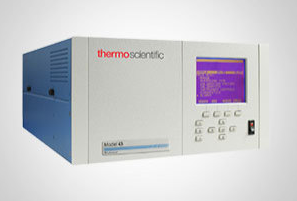
The tectonic composition of the portable infrared flue gas analyzer:
1. There are two types of light sources in the light-source radiation range, one single and the other dual. A single light source, provided that there is only one light element, enters the reference chamber and the sample room through two mirrors that form a set of equivalent energy beams. The two-light source structure, on the other hand, is one light source for the reference and sample rooms, respectively. Double-light sources cause error due to different heat and light. The task of the light source is to generate equal and stable infrared beams of equal energy with a certain frequency (2~12Hz). The light source is usually made of more nickel chrome wire.
The role of the testing room (detector) is to receive infrared radiation from infrared sources and convert it to electrical signals.
3 The sample room and reference room, where the sample room and reference room for most infrared analyzers are made of brass, request interior lubrication and gold plating to allow the infrared to reflect repeatedly in the air chamber for a good perforation. Products of glass, stainless steel or fluorine plastics may be selected for corrosive gas detection. The gas chambers are filled with non-absorbed gases. The sample can only pass through the sample room.
4. A beaming device designed to control the long and drifting detection of light-sourced light-ray signals by means of electro-motive-modified transversal signals.
5. The filtration room, which usually has two types of filtering room: an inflatable filtration room and an intervention filtration film, allows external wire analyzers to change the intervention filter to meet the need to detect different gases according to demand.