
The multi-purpose flue gas analyzer is an instrument that is widely used.
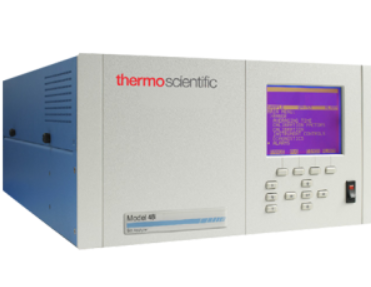
The advantages of the multifunctional flue gas analyzer are particularly evident in the following:
1. Powerful. Multiple gas coefficients can be analysed for detection, and differential pressure, current speed is selected.
2. Sampling is well developed. Actively turn on the creeping pump, discharge condensation water, very suitable for wet gas monitoring and analysis. At the same time, the instrument is equipped with a three-tier filter and a particle collection device, which can be used to filter dust and smoke particles.
3. Wireless manipulation. Operators remotely manipulate operating instruments; prevent on-site contamination by operators.
4. Weakly pumped. The internal high power thin membrane gas pump, with a maximum vacuum of up to -60 kPa and a smoke pipe with a negative pressure of 20kPa, is operational.
5. Respond agility. Frozen sample flow 2 - 3.5 litres/minute ensures that the sensor is exposed to sufficient flue gas and that the rate of reaction of progress is sufficient.
6. Reliable handling. Air pumps are highly resistant to corrosion.
7. Operations are simple. Operations are performed directly using the OK key.
8. Display visuality. Select a large-screen liquid crystal monitor, with all the results visible.
9. Portability. Direct flow, which can be charged at a single charge for six consecutive hours, is well suited to work on the industrial site.
10. Maintenance abbreviated. Self-diagnosing function, active alerting when a problem is presented and indicating where it occurs. Maintenance is easy.
11. Active maintenance. When the concentration of CO is excessive, it is actively cut off and the sensor is flushed with a back-up gas pump to extend its operational life.
12. Data records. The instrument contains 1,500 sets of data storage and 1 GBMC storage cards, actively stores the measured data and generates the EXCEL format file, with high-speed heat-sensitive printers inside the instrument printing the measured data at any time.
13. Average. User-defined storage times, active sampling, metering, storage and printing of averages of measured data and given time periods.
14. Selecting multiple types and length of probes to ensure adaptation to different on-site testing environments.
There are a number of sampling methods for multi-purpose flue gas analyzers, such as:
1. Direct extraction sampling (non-dispersible infrared absorption, ultraviolet absorption).
2. Dilution of gas sampling (including within and out of the pipe).
3. Direct measurement on-line (direct exposure of an infrared or ultraviolet light to the flue gas and absorption of the spectrum using the characteristics of SO2).
4. Pyrolysis.