
An oxygen-containing instrument for measuring the flue gas is referred to as a portable flue gas analyzer.
(1) Thermal magnetic oxygen analyzer of the portable flue gas analyzer is based on the physical properties of particularly high magnetic rates of oxygen in the flue gas composition to determine oxygen content in the flue gas. Oxygen is a magnetic gas (which can be referred to as a magnetic gas from magnetic sites) and is drawn into the magnetic field in an uneven manner, leading to a stronger magnetic field. The presence of heaters in the area reduces magnetic field pull, resulting in higher temperatures and lower magnetic rates of oxygen, and discharges from the magnetic field by being pushed by non-heated oxygen molecules with higher back magnetic rates, resulting in a "thermal magnetic convection" or "magnetic wind" phenomenon. The oxygen content of the sample can be measured by measuring the size of the magnetic wind at the required pressure, temperature and flow of the sample. Because the heat-sensitive component (pelis) acts as both a barrier to the two arms of an unbalanced bridge and as a heat-heating barrier, the temperature gradient occurs under the operation of the magnetic wind, i.e. the temperature of the arm of the gas side bridge is lower than the temperature of the arm of the gas side bridge. An unbalanced bridge will output the corresponding voltage values, depending on the oxygen content of the gas sample.
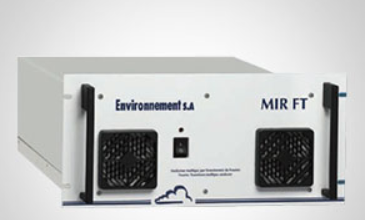
Thermomagnetic oxygen analyzers, despite their structural advantages, such as simplicity, ease of manufacture and adjustment, have gradually been replaced by the aerobic analyzer because of the disadvantages of slow resonance, significant miscalculation, susceptibility to measured ring congestion and severe corrosion of thermal sensitivity elements.
(2) The portable flue gas analyzer ZrO2 is a ceramic, a solid of an ion-conductive nature. At constant temperatures, it is monotole crystals, which, when temperature rises to 1150 °C, are transformed into cubic crystals, with about 7% volume contraction; When the temperature drops, it becomes monothermal crystals. If heated and cooled over again, ZroO2 would break. Therefore, a pure ZroO2 cannot be used as a measuring component. If the mandatory calcium oxide (CaO) or oxidation (Y2O3) are taken into account in ZroO2 as a stabilizer, then it becomes a stable oxidized oxidation information at high temperatures. At this time, the four-priced zirconium is replaced by a double-priced calcium or trivalent ion and an oxygen ion void occurs, so that ZrO2 is a solid electrolyte of anion. ZrO2 is the primary conductor of electricity through the movement of empty holes and becomes a good oxygen ion conductor when the temperature reaches 600°C or more.
A platinum electrolytes are burned on each side of the electrolyte, and when the oxygen splits on both sides of the oxen oxide is different, the oxygen on the one side of the high oxygen fraction is transported to the lower side of the oxygen fraction, with the result that the platinum pole on the one side of the oxygen fractional pressure loses the electron positive power, while the platinum pole on the other side of the low oxygen fraction is exposed to the electron-negative power, resulting in an oxygen-heated power gap between the two platinum electrodes. This power is only associated with the difference in oxygen content (Oxygen Enrichment) of the gas on both sides, when the temperature is certain. If the oxygen content of one side is known (e.g. constant oxygen content in air), the oxygen content of the other side (e.g. oxygen content in flue gas) can be used to indicate that the oxygen content of the flue gas can be detected by measuring the power intensity of the oxygen.
The Axyx Analyzer has the advantages of a simpler structure and sample pre-treatment system, a higher sensitivity and resolution, a wider range of measures and a faster response rate.