
The VOCs daily monitoring facility has a number of problems, and some aggregations have been made in response to current common problems, for which it would be interesting to learn.
Question one: Why is there a general resistance among SMEs to the selection of FID online monitoring equipment?
GC-FID is one of the main methods used more frequently in the country ' s existing Vocs testing standards. Hydrogen pyrotechnics (FIDs) have a high sensitivity to organic compounds (especially hydrocarbons) and are highly suitable for VOCs trace analysis because of their simple structure, high sensitivity, responsiveness, stability, small size and linear width. However, the complexity of the FID online monitoring system airways, the need for regular maintenance by specialized technicians, the need for more auxiliary gases during the testing process and the high volume of support equipment lead to the size of the system, make the system relatively costly to purchase and run.
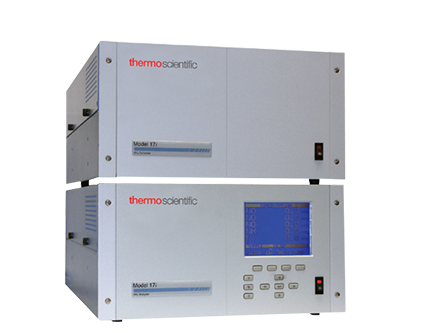
The prices currently in circulation are generally higher than $100,000, and some brands are higher than 200,000, and a wide range of small and medium-sized enterprises can hardly afford them. At the same time, the FID online monitoring system requires a high temperature and humidity of the operating environment and requires a station with a constant temperature and humidity to function properly. This means that the FID online monitoring system requires considerable human, financial and space investment in its practical application, making it difficult for it to be replicated on a large scale in SMEs. However, in the area of priority sources of pollution and extensive laboratory applications, GC-FID remains the dominant and fair detection technique in the industry, confident that as market applications increase and manufacturing costs decline, the price of GC-FID equipment will gradually be accepted by a wide range of consumer enterprises.
Question two: Why has the online monitoring equipment of the PD technologies been fading from online monitoring of market applications over the past two years, because its low price was once the norm for market demand?
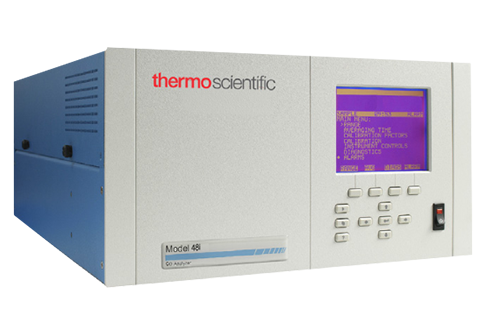
First, the basic rationale for the PD technology ' s VOC on-line monitoring equipment is to use ultraviolet (VUV) resulting from inert gas vacuum discharge to ionize gas molecules and to obtain gas concentrations to be measured by measuring the current strength of ionized gases. PID equipment has been used in the field of volatile organic matter over-alert alerts in the country for a number of years. In the application, however, the shortcomings of the PID technology are also revealed: the sensitivity of the PD to the detection of the various VOC components varies widely. In particular, the response to some of the short-chained hydrocarbons is extremely low or undetectable. Japan's Ministry of Atmospheric Affairs has conducted a rigorous comparative test of three methods of detection: catalytic oxidation without photo-infrared, FID, and PID. The PID was found to be highly selective in the composition of the sample. It also leads to the fact that the PID is only suitable for measuring the more homogeneous components of the VOCs gas, which is recognized by the PID sensors. Use limitations are significant. When used to detect complex gases, there are significant measurement errors.
In addition, because of the use of ultraviolet light sources, which generally have a useful life of approximately 6,000 to 10,000 hours, the PID sensors generally need to be replaced once a year, or even less, at a continuous cost to users. At the same time, the PID sensor, which is passively installed at the end of the VOC treatment device, is rapidly losing detection capacity due to its failure to adapt to the high-polluting gas environment at the end of the portal and to incomplete pre-treatment of dust paint fog, as the new volatile organic material control is required at the “triple rate” (collective rate, governance rate, removal rate). Thus, in recent years, environmental protection agencies and VOC-related enterprises around the world have come to recognize the limitations of the application of PID technology and have stopped encouraging the use of purely PID technology equipment in the field of online monitoring.
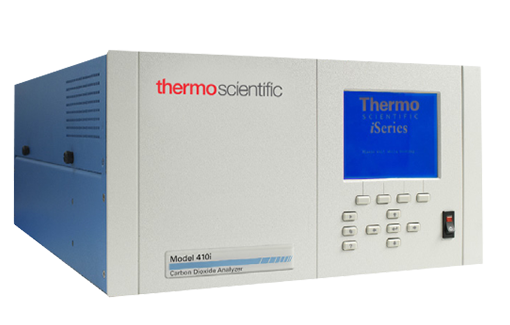
Question three: How do SMEs correctly select online monitoring technologies and products for volatile organic matter?
The correct choice of online monitoring equipment by SMEs in the face of the regulatory needs of VOCs online monitoring is indeed a dilemma for business owners, which is too expensive to apply and too cheap to measure instability to meet the technical requirements of industry management. Thus, there is a strong demand at the market end for an online VOCs monitoring facility that meets the technical requirements of industry management, at a price that is affordable to SMEs and integrated performance indicators.
In recent years, as national environmental authorities at all levels have focused and upgraded their regulatory requirements for volatile organic matter, there has also been an increase in market-based management trends and the mapping of management tools for the online monitoring of volatile organic matter. The technology applications of online monitoring devices are showing a variety of applications: GC-FID, PID, NDIR, Fullie, etc., are being promoted successively in “You Sing Me Up” applications. Some volatile organic matter-related enterprises have also explored on-line monitoring equipment for various volatile organic matter. Various technologies present the advantages and objective shortcomings of their application. We feel that, for small and medium-sized enterprises with low volatilized organic matter emissions, the selection of online monitoring equipment should be based on a scientificly sound selection of appropriate technical equipment based on the enterprise ' s own combined considerations and affordability.
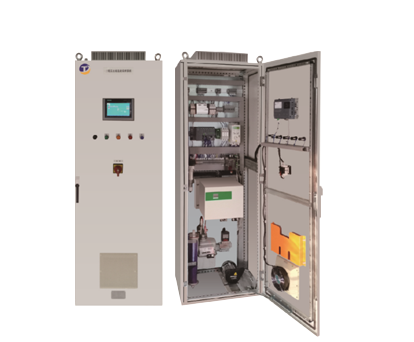
A large number of SMEs are now choosing to apply an online VOC monitoring facility that combines NDIR (non-dispersible infrared technology) and PID technology. This approach is a combination of “catalyzed + NDIR non-dispersible infrared + PID matching” techniques. The basic test principle is the catalytic oxidation of VOCs to CO2 and the strong absorption of CO2 in the infrared region, so NDIR is well suited to measure CO2 converted from VOCs and indirectly measure the total flue gas concentration by measured CO2 content. Catalysing oxidation+ non-dispersible infrared has a high degree of stability and sensitivity, which is not restricted by the VOC category, and can be more than 90 per cent responsive to all components of the VOCs, with a small input sample, which does not require a flammable gas and is safe and reliable. The catalytic oxidation+ non-dispersible infrared method has been included as one of Japan ' s VOCs standard methods. At the same time, the methodology was officially recognized as an international standard by the International Organization for Standardization in 2012 (ISO/FDIS13199-2012). Moreover, we know that this “catalyzed + NDIR non-dispersible infrared + PID” monitoring technology, which is an automatic VOC monitoring instrument, meets the HJ 1013 performance indicator requirements, that the total machine price has a clear value-for-money advantage vis-à-vis the FID, and that it has low operating costs and simple maintenance, making it more acceptable to a large number of SMEs, is the most promising VOCs online monitoring technology for future applications.