
The total hydrocarbons and the total hydrocarbons and the gas chromatography methods, respectively, are non-methane hydrocarbons. Methods I and II use gas chromatographs to determine the concentration of total and methane hydrocarbons in air, respectively, the difference being non-Methane hydrocarbons; method III uses GDX-102 and TDX-01 to adsorpt samples of air at constant temperatures, non-Methane hydrocarbons are adsorbed with sampling tubes, heat-resorption is followed, gas chromatographs are imported, determined by flame ionization detectors, and the results are calculated as perpentane.
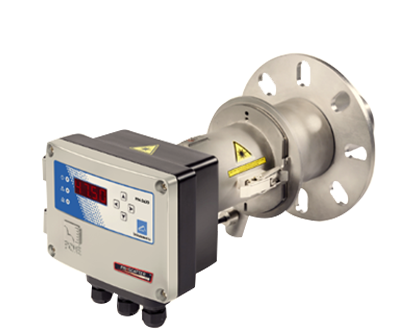
The gas chromatography method (HJ/T38-1999) for the determination of gas chromatography in the emissions from fixed sources (HJ/T38-1999) provides for the determination of non-material gas emissions from fixed source and unorganized sources, using mainly double-column flame ionation detector gas chromatographs, and syringes in which the total hydrocarbon and methane levels are measured, respectively, and the difference between the two is obtained at the non-methane total hydrocarbons level. VOCs environmental monitoring process

Vocs' methods of measurement
The air and exhaust gas monitoring and analysis methods use the “solid adsorption-thermal desorption gas chromatography-mass spectrometry” and the “gas chromatography-mass spectrometry for sample cans”. The "gas chromatography-mass spectrometry" sampling method requires high accuracy and cost and is rarely used in actual monitoring; most of the actual work uses the "solid adsorption-thermal decomposition gas chromatography-mass spectrometry" to monitor VOCs. This method is typically combined with a combination of a variety of adsorbents using three types of adsorption: 30mm Tenax GR+25mm Carbopack B, separated by 3mm of unsilicanated glass or quartz cotton, which applies to compounds in the C6-C20 range; 35mm Carbopack
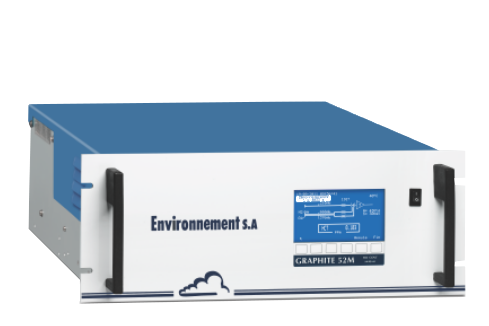
Carbosieve SIII and Carboxen 1000 for B+10mm, separated by non-silonyated glass or quartz cotton, which applies to compounds in the C3-C12 range, 13mm Carbopack C, 25mm Carbopack B and 13mm Carbosieve SIII or Carboxen 1000, which applies to compounds above C4[6]. A comparison of monitoring methods shows that the TVOC and VOCs standard monitoring methods are relatively small, and that there are multiple monitoring methods; the VOCs monitor differently and reflect different pollutant characteristics.