
|
What's the difference between the dust detector and the dust particle counter?Time: 2021-09-10 The dust particle counter and the dust detector are instruments for particle detection using laser dispersion principles, but their application areas are different. Particle counters are used in cleaner rooms, such as medicine, electronics, precision machinery, paint-brush manufacturing, micro-organisms etc., for the purpose of monitoring cleaner workstations, purification rooms, purification workshops, and cleaner levels to ensure the quality of products. Dust detectors are used primarily to measure the atmospheric environment and are applied in various environmental research institutions, meteorology, public health, labour hygiene, atmospheric pollution studies, and are used in disease centres, mines, metallurgicals, power plants, chemical manufacturing, health monitoring, environmental protection, online monitoring of the environment, etc.
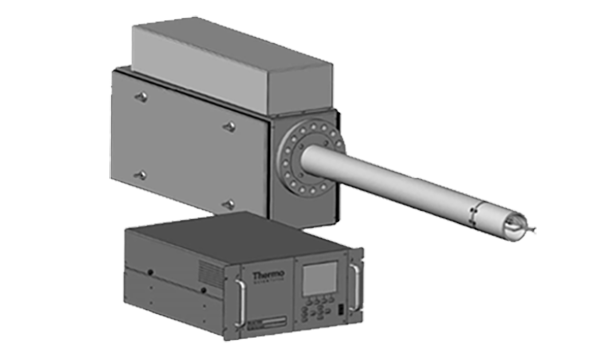
PM-CEMS Wet Extractive Dust Monitor In fact, the difference can be judged by the principles of light-scattering of two instruments. Let's start with the word "aerosol", which is the suspended system of liquid or solid particles in the air. Fog, smoke, haze, mist (soft), microdust and fumes are both natural or man-made atmospheric aerosols. They are important components of the atmosphere, as condensers of water droplets and crystals, as absorbers of solar radiation and as dispersors, and as participants in various chemical cycles. It follows from this that what we call PM2.5, PM10 is solid particles in atmospheric aerosols. Therefore, the dust detector is also called the aerosol detector. Dust Monitors The dust detector is a gas pump that is to be tested for aerosol inhalation detection module, and the aerosol is to be measured in two parts of a branch disposal stream, partially filtered to clean air through an efficient filter, as a means of protecting the elemental elements of the sensor room from the gas to be tested. Another part of the aerosol enters the sensor room directly as a sample to be tested. In the sensor room, the main element instruments are laser diodes, lenses and photovoltaic detectors. At the time of testing, lasers from the laser diodes first formed a thin-layered light source through a lens group. Tight light exposure produces dispersion when the aerosol is to be detected through the sensor room, and the light is detected by a PV detector to detect the light ' s dispersive light strength. PV detectors are photo-photo-photo and produce telecommunications numbers, which are comparable to the mass concentration of aerosols. They are then multiplied by a voltage calibration factor, which is obtained by measuring the aerosol at a given concentration. Dust Particle Counter Dust particle countr principles: Particle counters extract sample gases from sampling pumps. In the laser room, sample gases are exposed by lasers, the frequency of flashes reflecting particles represents the number of particles, and the light power of reflection represents the particle size of particles. Since the metaware in the laser room is not protected by sepsis, the laser particle counter should be used in a clean environment to prevent damage to laser sensors. When the measured area contains loose particles of materials, dust sources and spray areas, at least 12 inches from the entrance tube should be maintained to avoid contamination of sensors and pipes by particles and liquids. In summary, not only does the laser duster use a clean gas route for herpes protection, but its internal detection sensor structure is more complex and effectively protects meta-systems from contaminants and thus allows long-term use in more complex and highly polluting environments. The dust particle counter, on the other hand, can only be classified according to the number of particles, because of the absence of slugs in the air route design and the relatively simple structure of the detection sensor, resulting in greater error in the concentration of dust (estimated grade of the 8 channel, calculated error greater than 30 per cent); The classification of the 2-channel, with a calculation error of more than 50 per cent, makes it possible to measure particle count only in cleaner space. |