


|
Total Reduced Sulfur (TRS) MonitoringEvery year, 5 June is World Environment Day, and since its establishment in 1972, the peoples of the world have been called upon to pay attention and attention to environmental protection issues. As one of the world ' s recognized seven major public hazards, the environmental and social risks to humans are increasing, and monitoring needs to be urgently addressed and optimized.
I. Importance of stench monitoring Stinking is one of the seven most common hazards in the world, and it not only endangers human health, but also affects society, the economy and the environment. The deterioration of the living environment caused by stench pollution, which has triggered complaints and visits from the surrounding population, is a factor affecting social stability; (b) The resulting increased protection distance and reduced land use in the vicinity of sewage enterprises, resulting in waste of land resources; The destruction of the surrounding ecological environment, the loss of geographical image and the decline in external investment could ultimately inhibit the development of the regional economy. Contamination of stench gases is widespread in chemical, garbage, sewage, pharmaceuticals, brewing of alcohol, printing, textiles, farming, all enterprises with emissions, as well as in some residential areas, and seriously endangers productive life and the health of the population.
According to the National Environmental Reporting and Management Platform, in July 2019, the national “12369” environmental report showed that the highest number of air pollution was reported, with the highest number of reports of stench, accounting for 45 per cent of gas-related complaints, and 23.3 per cent of all environmental complaints in 2018, second only to noise. In some municipalities, the proportion of complaints of odour has increased every year since 2006, with complaints of odour accounting for 31 per cent of all environmental complaints in 2014, with noise being the first source of complaints. It is known that in the economically developed and densely populated areas of Shanghai, Guangdong, Zhejiang, Jiangsu and Shandong, complaints of stenching have also accounted for about 30 per cent of environmental complaints. Even 90 per cent of environmental complaints in some of the petrochemic regions, where the chemical industry is concentrated, originate from a stench problem. As a result, stench gas monitoring has become increasingly important, and the need to achieve immediate surveillance has become increasingly urgent. II. Relationship of the stench to the total reduction of sulphur The national standard GB14554-93, Emission Standards for Odor Pollutants, specifies emission concentrations for 8 air pollutants—hydrogen sulfide, ammonia, trimethylamine, dimethyl sulfide, methyl mercaptan, dimethyl disulfide, carbon disulfide and styrene—as well as odor concentration.
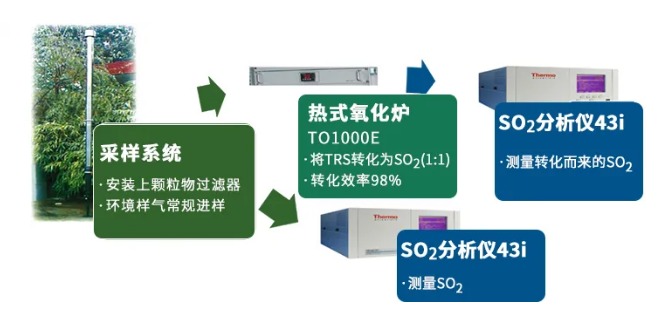
Of these 8 components, 5 are reduced sulfur compounds: hydrogen sulfide, dimethyl sulfide, methyl mercaptan, dimethyl disulfide and carbon disulfide. Their combined concentration can therefore be measured as total reduced sulfur (TRS). Thanks to the introduction of atmospheric grade (ppb) analyzers, sensitivity and real time are very good! It would be very cost-effective to carry out total reduction sulfur measurements in circumstances where no distinction between substances is required. For, in many cases, there are usually a variety of reductive sulphides, and a single monitoring of a particular substance is likely to fail to meet actual needs, but if all are measured at very high cost and not necessarily very good for the sensitivity and real-time of the various substances. Therefore, measuring the total reduction of sulphur (TRS) is an economically efficient method. 1. Scope of application:Monitoring of ambient air quality, monitoring of unorganized emission fixed-points, monitoring of plant air quality, monitoring of air quality in stench sensitive points, monitoring of discharges from sources of stench pollution, etc. 2. System composition: Monitoring of ambient air quality: Remove-Oxide Program 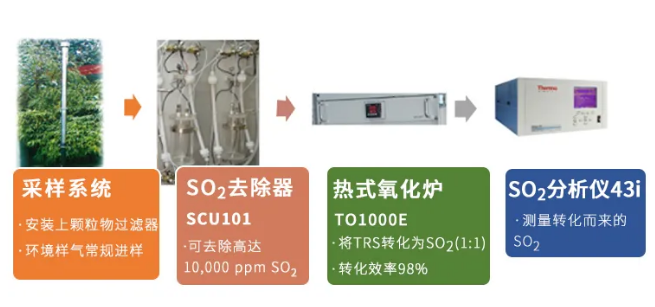 Monitoring of ambient air quality: Oxygen-minus scenario
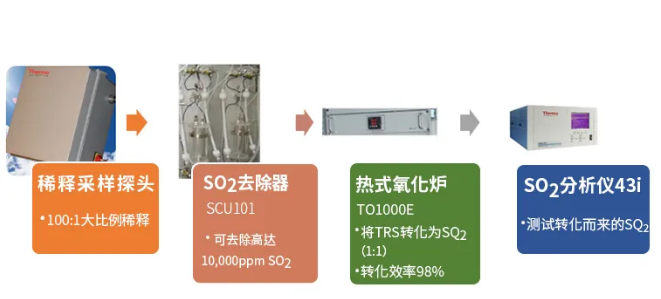
Emission monitoring from stench sources: Dilution - Removal - Oxidization Program
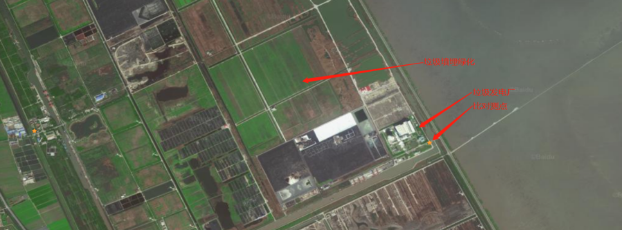
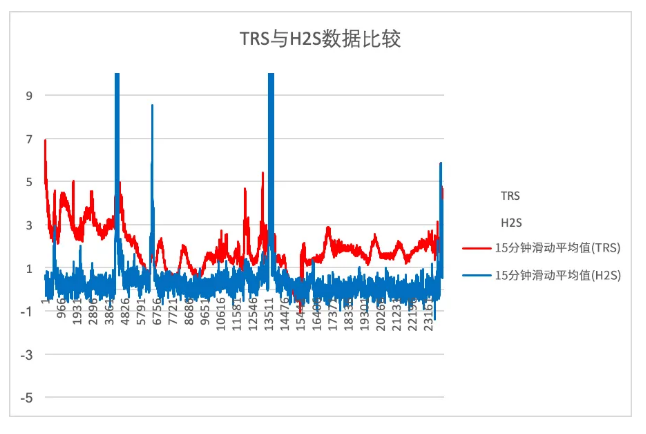
We choose to be Near landfills and waste power plants It's a very high area, with the original air quality monitoring station monitoring H2S, and we've added to the air quality monitoring station. Total reduction sulphur (TRS) monitoring system,It's been running for about half a month.。
BelowOn-site operationComparison of total reduction sulphur (TRS) with the original air quality monitoring station H2S data, run from 14 November 2019 to 1 December 2019, with data units in ppb, red curves in TRS and blue curves in H2S.
We can conclude that:
Taken together, we can see the following: If only for the purpose of stench monitoring, there is no need to distinguish between stench types, Total reduction sulphur (TRS) monitoring It could be a very effective way to monitor the stench. Sensitivity, real-time, economic They're very good. At least they can. Important additions to stench surveillance.。 |