


|
Marine Continuous Emissions Monitoring
Introduction At its 70th session, the International Maritime Organization (IMO) Marine Environment Protection Committee (MEPC) decided to implement globally, effective 1 January 2020, a requirement of not more than 0.50 m/m of sulphur content for bunkers (hereinafter referred to as “Global Sulphur Limitation Order”). In accordance with the relevant amendments, guidelines and circulars of the International Convention for the Prevention of Pollution from Ships, adopted by the International Maritime Organization, the Maritime Authority of the People ' s Republic of China, on 23 October 2019, also issued a bulletin on the Programme for the Implementation of the Global Tanker Limitation Order 2020, for the effective implementation of the Global Sulphur Limitation Order.
In the face of the stringent global sulphur limitation of IMO, shipowners and carriers have taken the following three measures to respond: 1 2 3 Owing to economic considerations, most shipowners have chosen to continue using high-sulphur oil and to install scrubber systems for compliance purposes. The additional scrubbers are subject to MEPC.259(68) Scheme B, i.e., the monitoring of the quality of exhaust gas and washing water by means of monitoring equipment approved by the classification societies to confirm that emissions have been achieved.
Thermo Scientific WW-50.
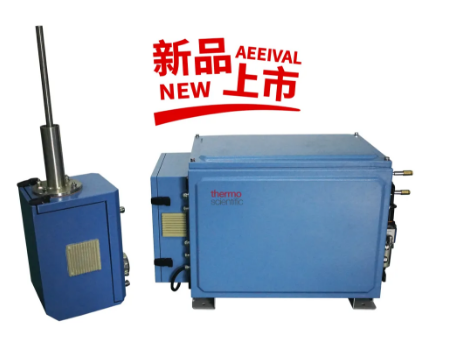
It's brand-new. Thermo Fisher Scientific Technology *Thermo Scientific UW-50 UW-50 products use ultraviolet differential absorption spectrum (UV-DOAS) and tradable semiconductor laser absorption spectrum (TDLAS) techniques while measuring SO 2、NO、CO2 This product accurately measures the emissions of gases from ships during voyage in real time, providing accurate feedback on the technical details of the devulcanization and denitration systems of the ship ' s engines. In particular,UW-50 can do it. Benefits for Monitoring Your Vessel's Desulfurization Exhaust 1 2 3 What factors make ship companies prefer UW-50? 1 2 3 4 5 6 UW-50 in-bit CEMS
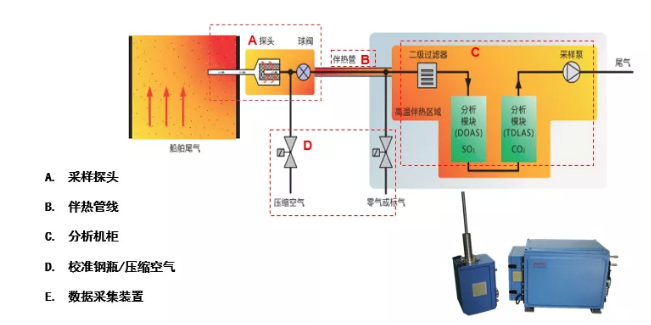
With high temperature sampling pumps, the ship's tail gas is filtered into SO through the probe (with filtration cores), thermal piping lines, ball valves, secondary filtering. 2、CO2 Waiting for analysis modules and final elimination of high temperature associated with heat up to 180°C for the flow of the entire process to avoid water condensation resulting in SO 2 Depletion, pipe crystallization, etc. UW-50 continuous monitoring system for flue gas emissions from ships Green development of Chinese shipping under high-quality escort |